Why Soft Sounds Help You Sleep (And Which Ones Work Best)
Apr 23, 2026950 words5 min read
Why Soft Sounds Help You Sleep (And Which Ones Work Best)
Some people can fall asleep in total silence.
Others need a fan, rain sounds, ocean waves, or one very specific thunderstorm recording they would probably defend with their life.
If that’s you, you’re not weird.
Your brain just likes a little help settling down.
That’s what soft sounds for sleep do.
They give your mind one simple thing to notice, so it stops reacting to every tiny sound, thought, and “wait, did I reply to that email?” moment.
And once your brain has something steady to focus on, it doesn’t have to stay on alert anymore.
Why your brain relaxes with soft sounds for sleep
Your brain is built to notice change.
That means:
- sudden sounds
- weird silence
- random bumps in the night
- your own thoughts getting louder for no reason
A soft, steady sound makes everything feel more predictable.
And when things feel predictable, your brain calms down faster.
So no, it’s not just “noise.”
It’s more like giving your brain a boring little job so it stops making trouble.
Something consistent enough that it slowly fades into the background.
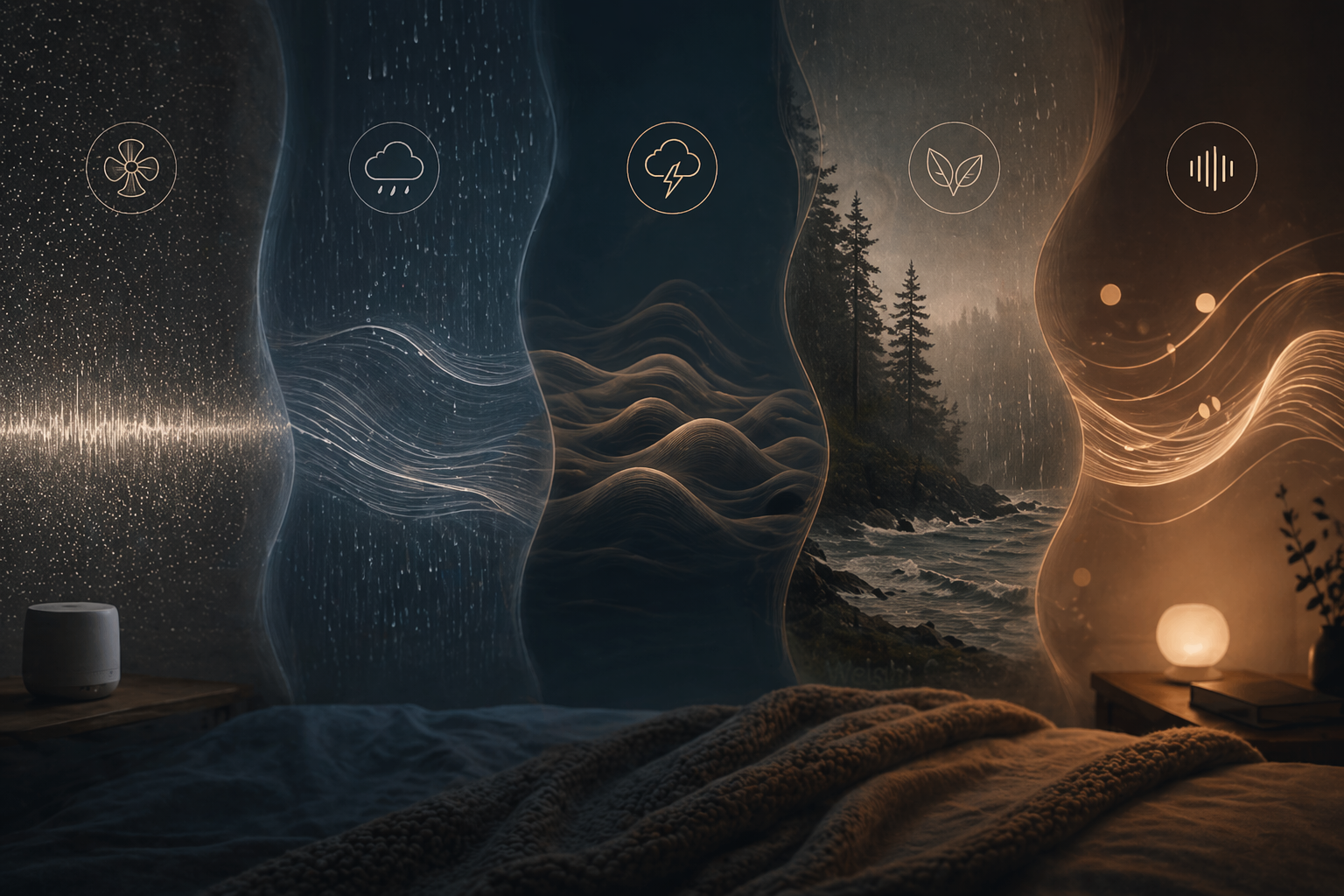
The best types of soft sounds for sleep (and how they feel)
Not all sleep sounds do the same thing.
Some are better for blocking noise.
Some are better for calming thoughts.
Some just feel nicer.
Here’s the real-life version:
White noise for sleep: block everything out
White noise is the classic fan-like sound.
It’s steady.
Plain.
Kind of boring.
Which is exactly the point.
It helps cover little sounds that would normally pull your attention:
- traffic
- neighbors
- barking dogs
- someone moving around the house
- that one mystery sound your room makes at 1:14 a.m.
It creates a consistent layer so nothing suddenly stands out.
Best for:
- light sleepers
- noisy homes
- people who want the simplest option
Pink noise for sleep: softer and more natural
Pink noise is gentler.
It feels less like static and more like:
- rain
- wind
- a soft waterfall
- leaves moving outside
If white noise feels too sharp, pink noise usually feels easier on the ears.
It blends into the background more smoothly, so your brain lets go faster.
Best for:
- people who want something calm, not harsh
- anyone who likes nature sounds
- people who want the room to feel softer
Brown noise for sleep: calm a loud, busy mind
Brown noise is deeper and heavier.
Think:
- distant thunder
- airplane hum
- deep rushing water
- a low rumble
This one is great when your brain feels too “bright” or busy.
It has that grounding effect where everything feels a little less buzzy.
Like turning down the intensity of everything at once.
Best for:
- racing thoughts
- anxiety-heavy nights
- people who hate thin, hissy sounds
Nature sounds for sleep: simple and comforting
Rain, ocean waves, forest sounds, crickets.
These work because they feel familiar and safe.
Also, let’s be honest, rain sounds have insane main-character energy at bedtime.
They don’t just block noise—they make the space feel calmer.
Best for:
- people who want relaxing sounds for anxiety sleep
- anyone who doesn’t like machine-made noise
- people who want bedtime to feel cozy, not clinical
Soft music or voices: when silence feels too empty
Some people don’t want noise.
They want:
- soft instrumental music
- a sleepy podcast
- a calm audiobook
- someone talking quietly in the background
This works best when the sound is gentle enough that you’re not actually paying attention.
If you’re suddenly invested in the plot, that’s not sleep audio anymore.
That’s entertainment.
The goal is to lightly hold your attention—not fully grab it.
Best for:
- overthinkers
- people who don’t like silence
- brains that settle better with a gentle anchor
How to choose the best sound for your sleep
Annoying answer: it depends on what kind of problem you have.
Try this:
- Too much outside noise? White noise
- Thoughts feel loud? Brown noise
- Want something softer? Pink noise
- Want cozy and calming? Nature sounds
- Need your brain to follow something? Soft music or a quiet voice
That’s it.
You do not need a complicated sleep setup.
You just need the sound that makes your brain stop checking everything.
The one that fades into the background instead of pulling you forward.
A simple way to test soft sounds for sleep
Try one sound for two nights each.
Notice:
- Did you fall asleep faster?
- Did your thoughts calm down?
- Did the sound help or annoy you?
- Did it feel comforting or distracting?
Pay attention to how your body reacts, not just what you think sounds nice.
Your best sound is not the “perfect” one.
It’s the one that makes the night feel less sharp.
When soft sounds finally make sleep easier
You don’t need to train yourself to love silence if silence makes your brain do cartwheels.
Sometimes the best sounds for sleep are just the ones that make your body go:
“Oh.
Nothing important is happening.
We can rest now.”
That quiet shift is usually enough.
A quiet way to slow things down at night
If your mind feels crowded at night,
you don’t have to push through it.
Sometimes you just need something softer
to let your thoughts settle on their own.
That’s where Held fits quietly.
Nothing intense.
Just something calm to come back to.